
We frame each dispatch around what changed, why it matters, and what to watch next in the cycle.
Why Reading Food Labels Matters
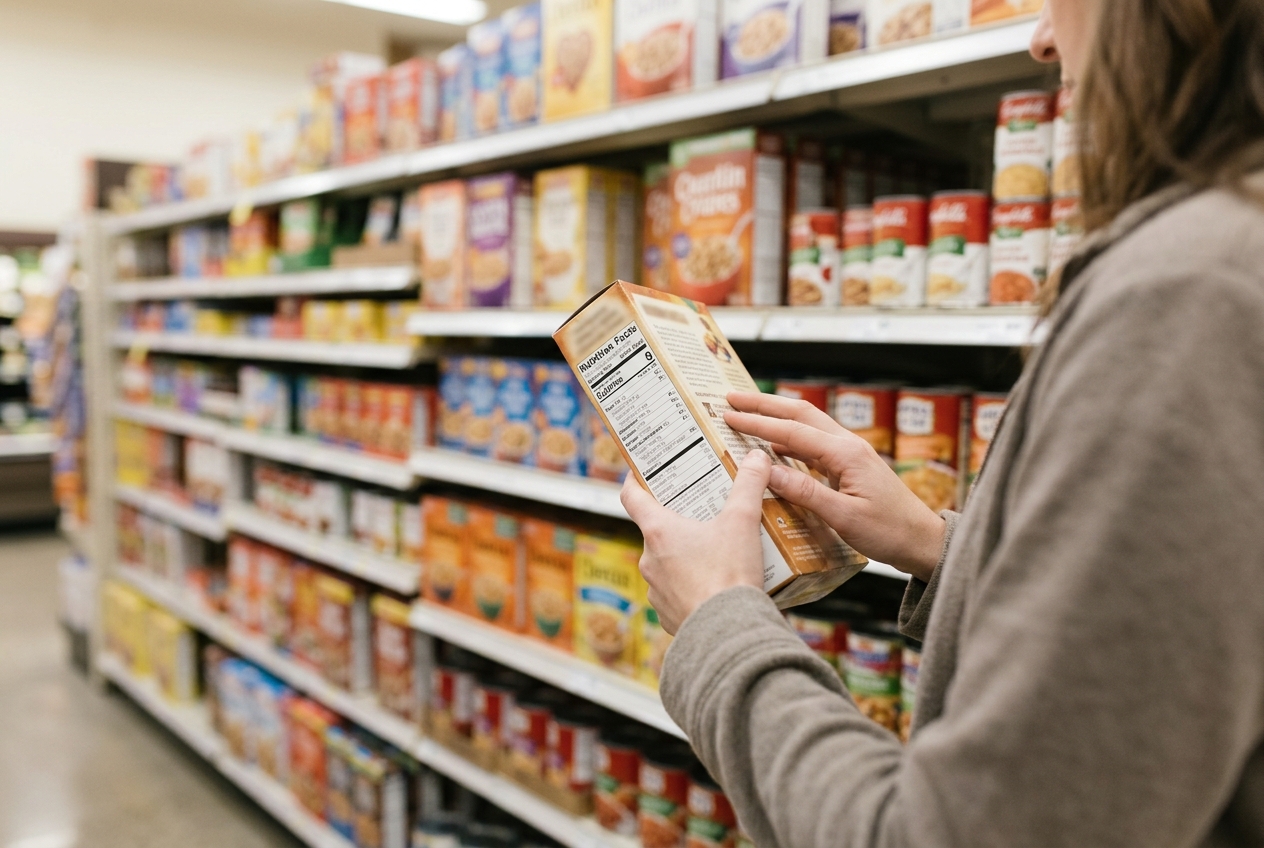
Food labels turn what is inside a package into nutrition information you can use. The Nutrition Facts Label shows calories per serving, key nutrients, and how they relate to a typical daily diet, helping you compare products and see whether a food matches your health goals. People may focus on different lines, such as calories for weight management, sodium for blood pressure, or saturated fat and added sugars for heart and metabolic health. Checking the serving size first, then looking at the rest of the panel, helps you judge whether the amount you actually plan to eat fits your needs and any guidance from a health professional.
Labels, however, have limits and cannot replace individual advice. The numbers are based on standardized serving sizes and general daily values, which may not match your own energy needs, medical conditions, or activity level. Labels also do not capture overall diet quality, your eating pattern across the day, or how foods are prepared and combined. Some nutrients or ingredients of interest may be missing, and front-of-package claims can highlight one benefit while other aspects receive less attention. Reading labels carefully supports more informed choices, but detailed questions about your diet are best discussed with a qualified nutrition or health professional.
Understanding the Nutrition Facts Label
The Nutrition Facts label gives a snapshot of what is in a packaged food or beverage. It starts with serving information, showing the serving size and how many servings are in the container. Serving sizes reflect how much people typically eat, not what is ideal for health, so your usual portion may be larger or smaller. Because every number on the label is based on this serving amount, it is useful to look here first when you compare similar products or estimate how much you are actually eating.
Below the serving information, the label lists calories per serving, which show how much energy you get from one portion. This line is often printed in a larger font because calorie intake affects overall energy balance. Calories, however, do not tell the whole story. Foods with the same calories per serving can differ widely in fat, added sugars, fiber, or protein. Reading beyond the calorie line helps you see whether most of the energy comes from nutrients you may want to increase, such as fiber, or from ones you may try to limit, such as added sugars.
Under the calories line, the nutrient section lists fats, carbohydrates, proteins, and selected vitamins and minerals, often with a percent Daily Value next to each. These percentages show how much one serving contributes to an average daily diet based on a general calorie level, not individual needs. Higher values can be useful for nutrients like dietary fiber, while lower values may be preferable for saturated fat or sodium if you are limiting them. Because these reference values are only estimates, they work best as a simple way to compare products and make label reading more consistent.
| Label Area to Scan | What to Notice | Quick Check | When to Focus Here |
|---|---|---|---|
| Serving size line | Amount per serving | Portion same or larger than usual | Any packaged snack or drink |
| Servings per container | Total servings listed | Plan how much you might eat | Items often eaten in one sitting |
| Calories per serving | Energy for one serving | Compare similar products | Weight and energy awareness |
| Total fat and saturated fat | Type of fat listed | Prefer lower saturated fat | Meals where fat adds up quickly |
| Sodium line | Salt-related number | Aim for moderate level | Soups, sauces, frozen meals |
| Dietary fiber and protein | Filling nutrients | Look for higher fiber or protein | Foods meant to keep you satisfied |
Serving Size and Portions
On a Nutrition Facts Label, the serving size is the amount used to calculate calories per serving and other nutrients, such as one cup of cereal. It is based on typical eating patterns, not a personal recommendation. All values on the label apply only to this amount, so eating more or less changes your actual intake compared with what is printed.
Portion size is the amount you actually eat, which may be larger or smaller than the serving size. If you pour two cups when the serving size is one cup, you take in about twice the calories and listed nutrients. Comparing your planned portion with the serving size helps you estimate how much energy and nutrients you are really getting, keeping in mind that label numbers are rounded and approximate.
Daily Value Percentages and Nutrient Goals
On a typical Nutrition Facts Label, the percent Daily Value shows how much one serving of a food contributes to a general daily nutrient target for an average adult eating about 2,000 calories. These numbers are set by regulation and are meant as broad guidance, not personalized medical advice. As a quick guide, about 5 percent Daily Value or less is usually considered low for a nutrient, while around 20 percent or more is considered high, helping you tell whether sodium, saturated fat, or other nutrients are present in relatively small or large amounts.
Daily Value percentages also make it easier to compare foods and match choices with personal nutrition priorities. For nutrients many people try to limit, such as added sugars, saturated fat, or sodium, choosing products with lower percentages per serving can help keep overall intake lower across the day. For nutrients people often need more of, like dietary fiber, calcium, or iron, items with higher percentages can contribute more toward daily goals. Because the system uses a single reference calorie level, it may not fit children, very active people, or those following specific medical guidance, but it still works as a useful comparison tool even when the exact percentages are not a perfect fit.
Using % Daily Value to Compare Foods
% Daily Value on the Nutrition Facts Label shows how much one serving contributes to a typical 2,000 calorie day. When reading food labels, you can scan these percentages to compare similar products. For nutrients that are better limited, such as saturated fat, sodium, and added sugars, a lower percentage per serving means the food adds less of that nutrient. For nutrients many people try to get enough of, such as fiber, calcium, iron, and potassium, a higher percentage suggests a more helpful choice for that nutrient. These values are only a general guide, because calorie and nutrient needs differ with age, health conditions, and activity level, so they are best used as a starting point rather than a personalized goal.
Added Sugars, Fats, and Other Key Nutrients
On the Nutrition Facts label, calories per serving show how energy dense a food is, but the surrounding nutrients explain where those calories come from. Lines for total and saturated fat, trans fat, cholesterol, sodium, carbohydrates, fiber, sugars, and protein help put the number in context. All values are listed per serving, so they only match what you eat if your portion is similar to the serving size on the package. If you eat more than one serving, you also take in more calories and nutrients than the label alone may suggest.
The line for added sugars highlights sugars that are put into a food during processing, such as table sugar, syrups, or honey, rather than sugars naturally present in fruit or plain milk. The percent Daily Value for added sugars shows how much one serving contributes to a suggested upper limit for a typical energy intake. Foods with similar calories per serving can differ in how much of that energy comes from added sugars versus other nutrients, so checking this part of the label can help identify options that leave more room for foods and drinks rich in vitamins, minerals, and fiber.
Saturated fat and sodium are emphasized because many people already consume them above recommended amounts. Their grams and percent Daily Value per serving show whether a food is a small or large contributor to daily limits. A product that seems moderate in calories per serving may still be high in saturated fat or sodium, which can matter for people monitoring blood pressure or blood lipids with professional advice. Instead of always choosing the lowest numbers, the label can be used to balance higher amounts in one food with lower amounts in others across the day.
Q&A
-
Why look at the Nutrition Facts label instead of the front?
Front messages often highlight one feature. The Nutrition Facts label follows set rules and shows calories per serving, nutrients, and Daily Values so you can compare foods more consistently. -
What is the difference between serving size and my portion?
Serving size is the amount used to calculate the numbers on the label. Your portion is what you actually eat. If you eat two labeled servings, you get about twice the calories and nutrients. -
How can % Daily Value guide my choices?
% Daily Value is a quick reference. For nutrients to limit, such as sodium or saturated fat, lower percentages help. For fiber, iron, or similar nutrients, higher percentages may be useful, depending on your health needs. -
What does the added sugars line mean?
It shows sugars added during processing, not natural sugars already in foods. This helps you see how much extra sugar a food contributes so you can reduce it when that supports your nutrition goals. -
Why read the ingredient list as well as calories per serving?
Ingredients appear in order by weight. Reading this list with the calories per serving helps you check whether the main components of the food match what you prefer to eat.